
The Ultimate Guide to Warehouse Racking Types: Optimizing Your Storage Efficiency
Introduction
In the world of logistics and supply chain management, warehouse space is a premium asset. Making the right choice in warehouse racking types is not just about stacking items; it’s about maximizing cubic space, improving inventory accessibility, and dramatically boosting operational efficiency. The wrong choice can lead to wasted money, lost time, and a bottleneck in your entire operation.
This comprehensive guide will break down the most common industrial shelving systems and storage rack classifications, detailing their features, benefits, and ideal applications. By the end, you will be equipped to select the perfect racking system to meet your facility’s unique demands.
I. Core Pallet Racking Systems (The Workhorses)
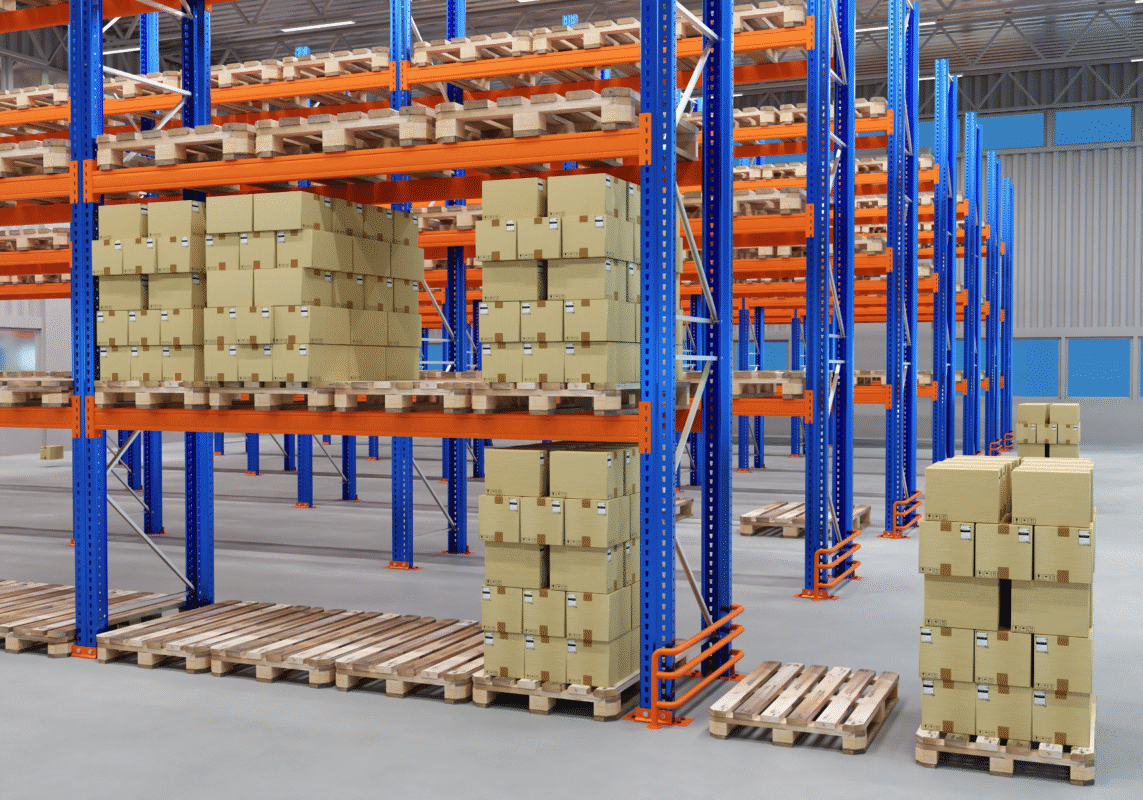
These systems are the backbone of most modern warehouses, designed primarily for storing palletized loads accessed by forklifts.
Selective Pallet Racking
- Description: The most common and cost-effective system. It consists of upright frames and horizontal beams, allowing single-deep storage.
- Ideal for: Warehouses with a high volume of Stock Keeping Units (SKUs) and a need for immediate access to every pallet.
- Key Advantage: 100% Selectivity. You can access any pallet at any time without moving others.
- Trade-Off: Lowest storage density; requires the most aisle space.
Double Deep Racking
- Description: Similar to selective racking, but pallets are stored two deep from the aisle.
- Ideal for: Operations with similar products stored in large quantities.
- Key Advantage: Increases storage density by up to 50% compared to selective.
- Trade-Off: Requires a specialized forklift with extending forks; selectivity is reduced (accessing the back pallet requires removing the front one).
好的,这是一篇您可以直接使用的英文SEO新闻文章草稿,涵盖了之前规划的关键内容和结构。
The Ultimate Guide to Warehouse Racking Types: Optimizing Your Storage Efficiency
Introduction
In the world of logistics and supply chain management, warehouse space is a premium asset. Making the right choice in warehouse racking types is not just about stacking items; it’s about maximizing cubic space, improving inventory accessibility, and dramatically boosting operational efficiency. The wrong choice can lead to wasted money, lost time, and a bottleneck in your entire operation.
This comprehensive guide will break down the most common industrial shelving systems and storage rack classifications, detailing their features, benefits, and ideal applications. By the end, you will be equipped to select the perfect racking system to meet your facility’s unique demands.
I. Core Pallet Racking Systems (The Workhorses)
These systems are the backbone of most modern warehouses, designed primarily for storing palletized loads accessed by forklifts.
1. Selective Pallet Racking
- Description: The most common and cost-effective system. It consists of upright frames and horizontal beams, allowing single-deep storage.
- Ideal for: Warehouses with a high volume of Stock Keeping Units (SKUs) and a need for immediate access to every pallet.
- Key Advantage: 100% Selectivity. You can access any pallet at any time without moving others.
- Trade-Off: Lowest storage density; requires the most aisle space.
2. Double Deep Racking
- Description: Similar to selective racking, but pallets are stored two deep from the aisle.
- Ideal for: Operations with similar products stored in large quantities.
- Key Advantage: Increases storage density by up to 50% compared to selective.
- Trade-Off: Requires a specialized forklift with extending forks; selectivity is reduced (accessing the back pallet requires removing the front one).
II. High-Density Racking Systems (Maximizing Space)
When you need to store the maximum amount of product in the smallest footprint, high-density systems are the solution.
Drive-In / Drive-Thru Racking
- Description: Pallets are stored on rails running depth-wise, allowing a forklift to literally drive into the bay to deposit or retrieve loads.
- Ideal for: Large quantities of the same product (low SKU count), non-perishable goods, and cold storage facilities.
- Key Principle: LIFO (Last-In, First-Out) for Drive-In; FIFO (First-In, First-Out) for Drive-Thru.
- Trade-Off: High risk of rack damage due to forklift intrusion; extremely low selectivity.
Pallet Flow Racking (Gravity Flow)
- Description: Pallets are loaded from one side and roll down an inclined conveyor/roller system to the picking face on the opposite side.
- Ideal for: FIFO inventory (essential for food, beverages, and dated materials), high throughput operations.
- Key Advantage: Automatic stock rotation, minimal travel time for forklifts and pickers.
Push-Back Racking
- Description: Pallets are placed on nested carts that ride on inclined rails. When a pallet is loaded, it pushes back the previous pallet.
- Ideal for: High-density storage using the LIFO method (up to 2 to 6 pallets deep per lane).
- Key Advantage: Offers higher selectivity than Drive-In while maintaining excellent density.
III. Specialized and Non-Palletized Shelving
These systems address unique product shapes or space utilization challenges.
Cantilever Racking
- Description: Features vertical columns with horizontal arms extending outward, resembling a tree structure.
- Ideal for: Storing long, bulky, and irregular-shaped items like timber, pipes, steel bars, tubing, and furniture.
- Key Advantage: Complete freedom from front upright obstructions.
7. Boltless / Light-Duty Shelving
- Description: A system of metal shelving with adjustable levels, assembled without nuts and bolts.
- Ideal for: Small parts storage, carton storage, retail backrooms, and manual picking operations.
- Key Advantage: Easy and quick to assemble, ideal for non-palletized inventory.
Mezzanine Systems
- Description: Not technically a “rack,” but a freestanding, structural steel platform that creates a second level within a warehouse.
- Ideal for: Utilizing vertical space to add storage, office space, or assembly areas without expensive building modifications.
| Factor | Question to Ask | Why It Matters |
| Inventory & Product | What are the dimensions, weight, and fragility of the materials? | Determines the required load capacity, beam length, and deck type. |
| Throughput & Velocity | Do you need FIFO or LIFO? How fast must products move in and out? | Dictates the need for gravity flow (FIFO) versus drive-in (LIFO) systems. |
| Space Utilization | What is the clear height of the warehouse? Is floor space or cubic space the priority? | Determines if you need high-density systems or vertical solutions like mezzanines. |
| Budget & Equipment | What material handling equipment (forklifts) do you currently use? | Some systems (like Double Deep or VNA) require specialized, more expensive equipment. |
Conclusion
The evolution of warehouse racking types provides robust solutions for almost any storage challenge. Whether you require the high selectivity of standard selective racking or the extreme density of a push-back system, the key to success is aligning the racking design with your inventory characteristics and operational flow.
Don’t let inefficient storage slow your business down. Contact our storage solution experts today for a free warehouse audit and personalized racking layout plan!
Leave a Reply